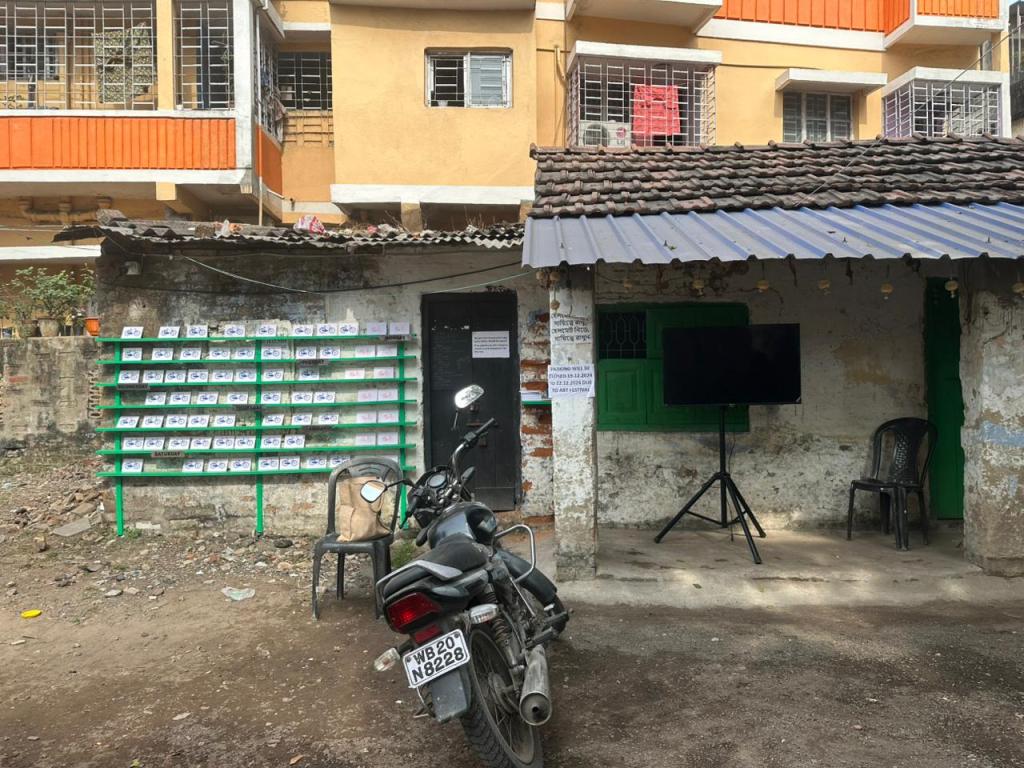
This project examines the parking lot as a liminal space—an overlooked threshold between domestic life and work, where individuals temporarily abandon their cycles as part of their daily commute. Though seemingly mundane, this site plays a critical role in the everyday rhythm of the city, shaped by both personal routine and institutional control. The work documents the transformation of this space across the day: from early morning emptiness to mid-day congestion, and back again into silence—mirroring the pulse of urban life.
The temporary closure of the parking lot during an art festival becomes a point of rupture. What happens when access is denied to a space so deeply embedded in people’s daily lives? The community’s negotiation of this disruption—seeking alternate spaces, adjusting routines—becomes a quiet act of resistance, revealing how authority intervenes in, regulates, and sometimes excludes individuals from public space.
This work also confronts the gendered dynamics of access. The parking lot is a predominantly male-occupied space, making visible a broader pattern of inequality in urban mobility.
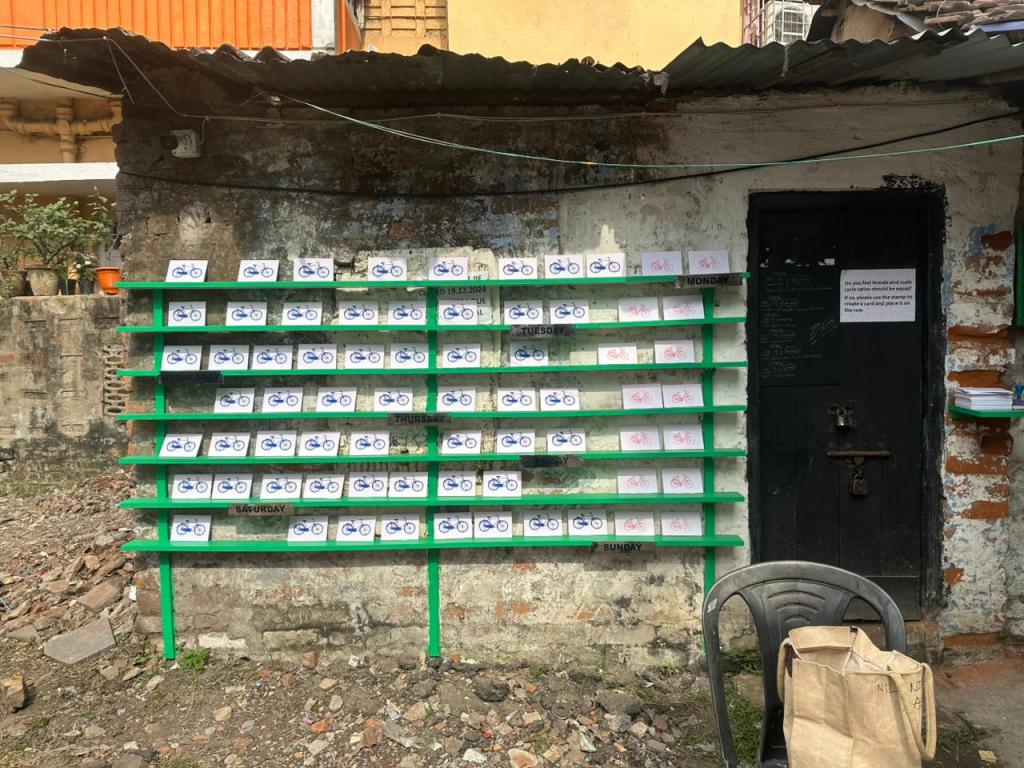
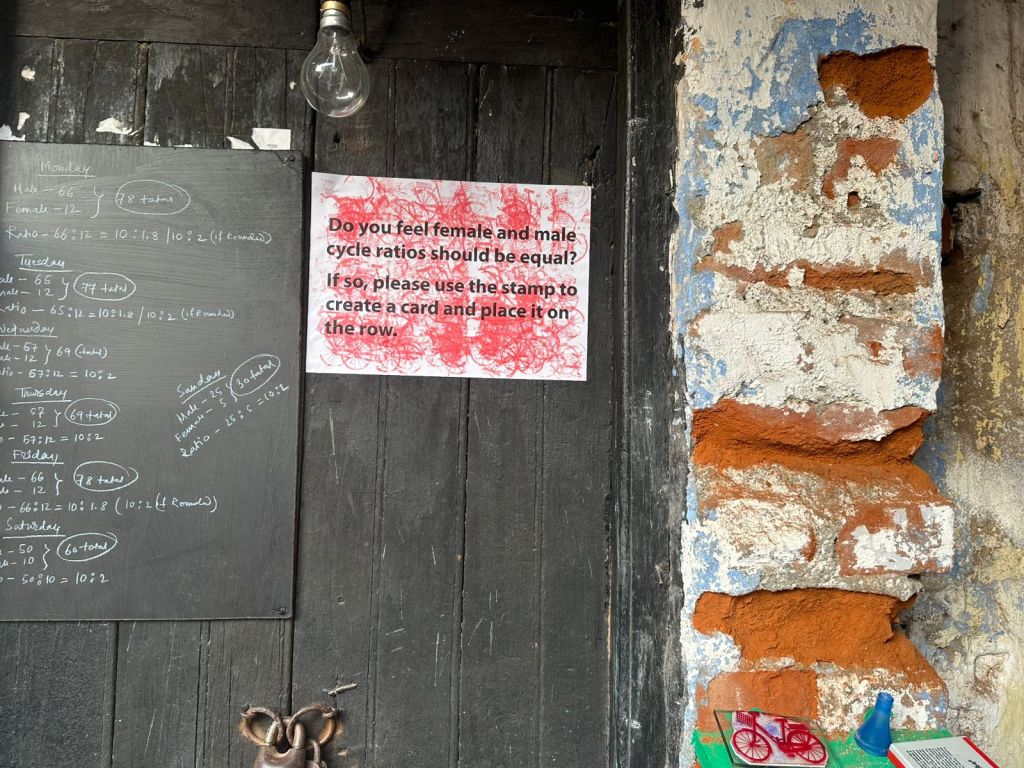
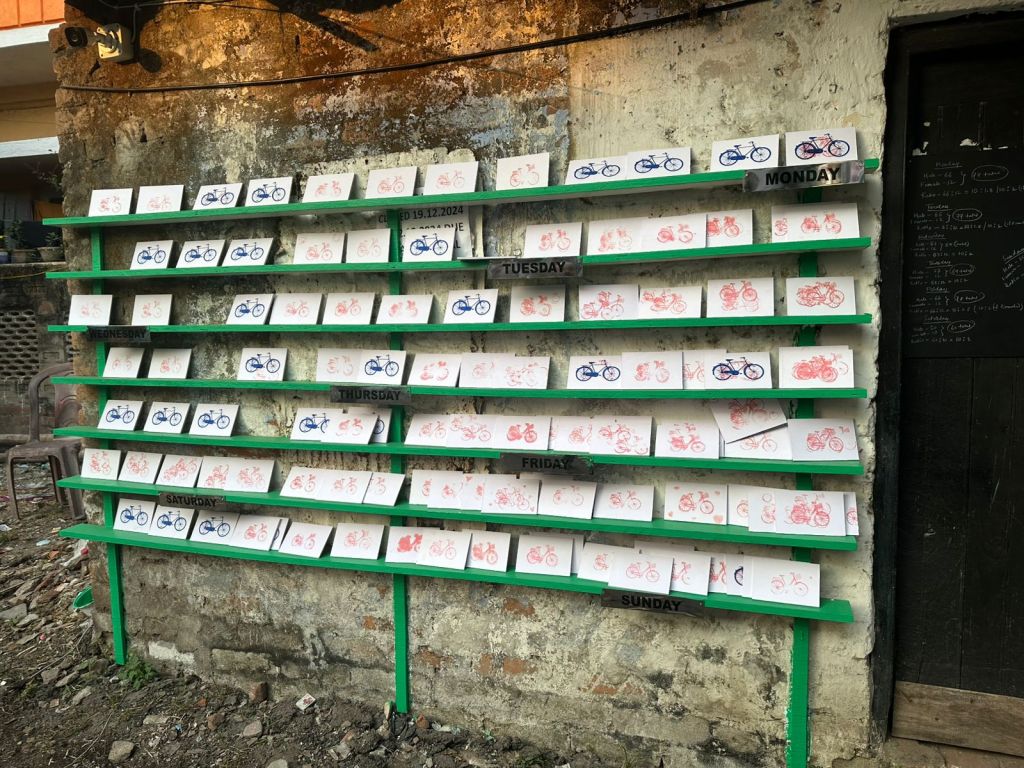
Over a week, I documented how many male and female cycles were parked in the lot each day. The results were striking: the ratio stood at 10:2 in favour of male users. In response, I created an interactive installation. A shelf with seven rows, representing each day of the week, was installed on the wall of the parking lot. Besides the installtion I placed blank cards and a stamp with a ladies’ cycle on it. Anyone who feels the ratio should be equal can stamp a card and place it on the shelf. This small action becomes a collective gesture—visually challenging the imbalance and inviting the public to imagine a more inclusive use of space.
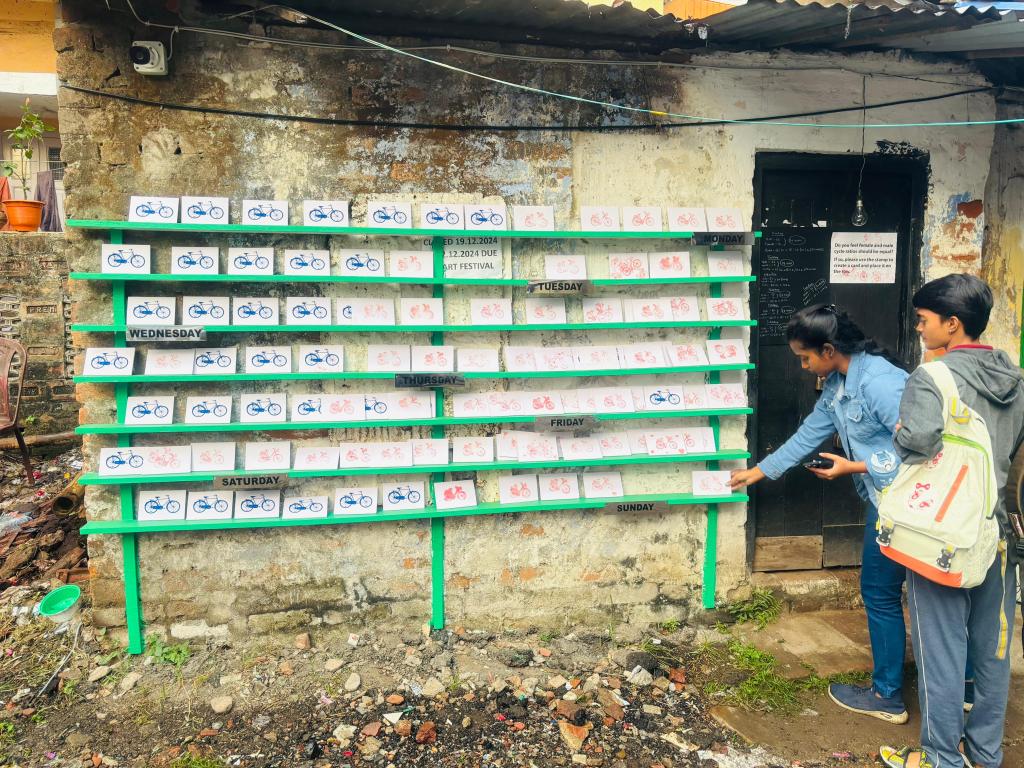
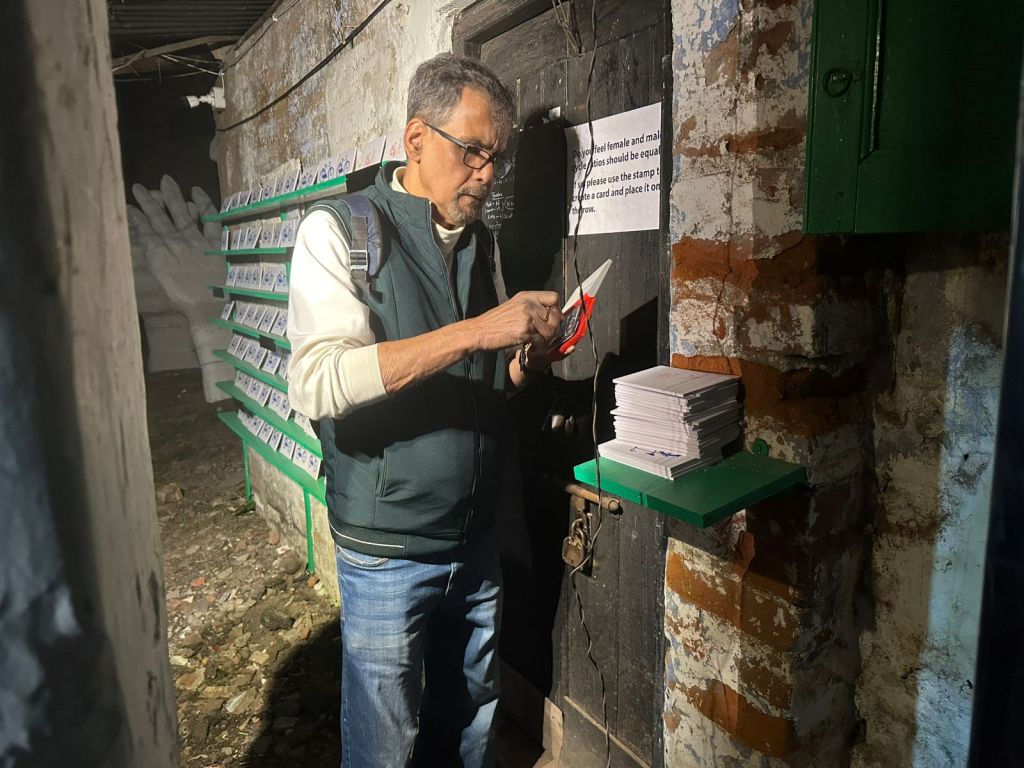
The project was displayed during the Behala Art Fest, Kolkata, West Bengal, India, 2024. I am also thankful to Curator Anuradha Pathak for her support.
 NILANJAN DAS